English
 Français
 Deutsch

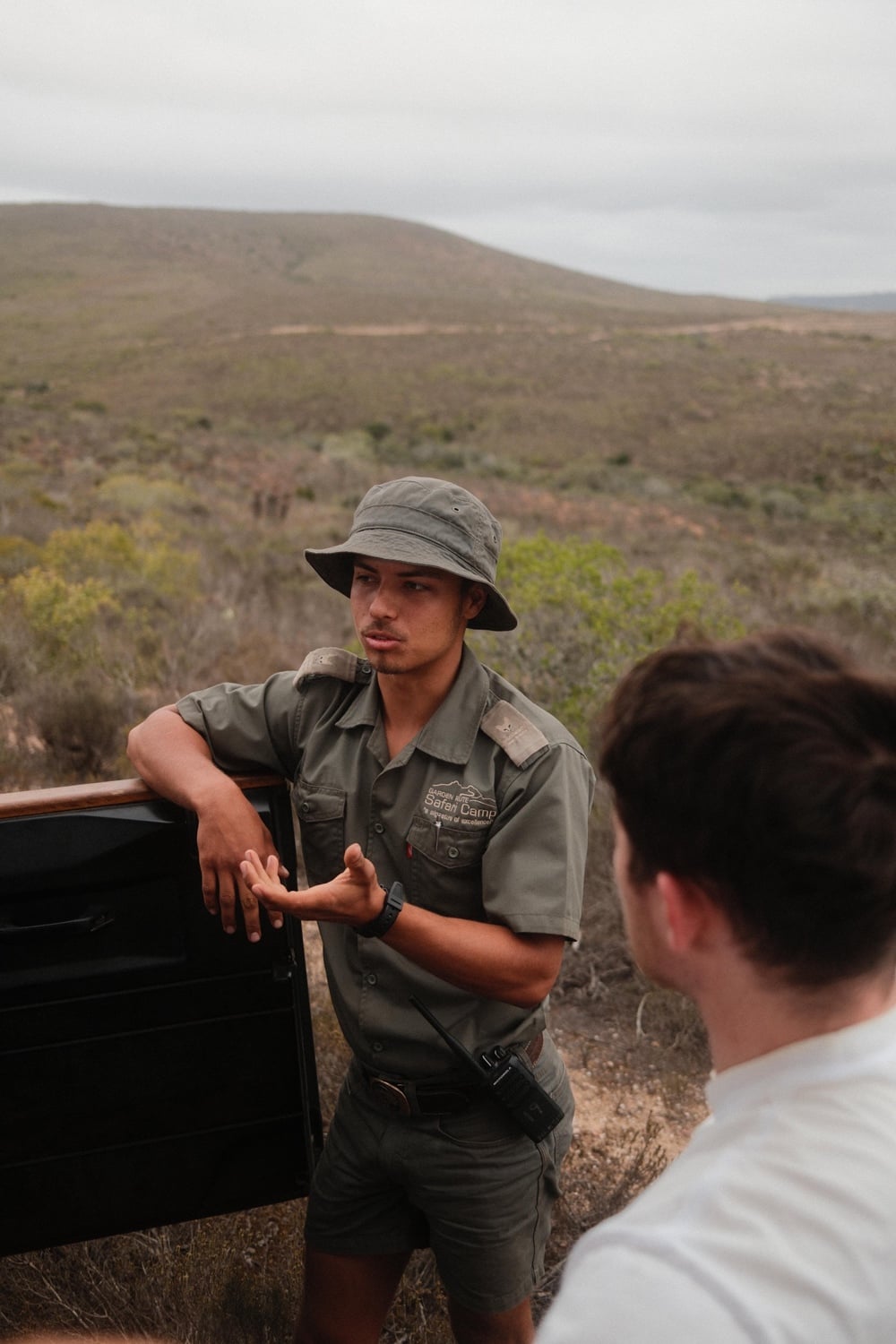
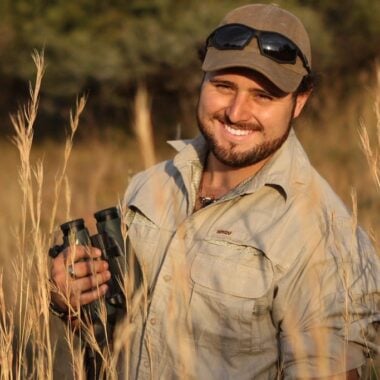
At 22 years old, Mark Heystek already speaks about the land like someone who has walked it for a lifetime.
He’s currently based at Brandwacht Game Reserve, home to Garden Route Safari Camp, where he works full-time as a field guide and also lives on the reserve. “It’s my workplace and my place of residence,” he says. “I’ve been working here for almost three years.”
Born in Durban but raised in George from the age of four, Mark grew up in the shadow of the Outeniqua Mountains. There were no regular trips to Kruger or Addo. Instead, he explored what he had: fynbos slopes, dams, forests, and mountain paths.
“I remember being six years old. My grandpa would take me for walks in the park or around the dam. I’d pick up rocks, and he’d point out birds. That curiosity just grew.”
By the age of twelve, he and a friend were birding seriously. Cameras in hand, species lists in their pockets, they hiked mountains and pushed deep into forests looking for rare sightings. “You end up looking at the plants the birds eat, the flowers they like. Then you start noticing footprints. You start seeing all the intricate details that make up an ecosystem. You can’t help but become a general nature enthusiast.”
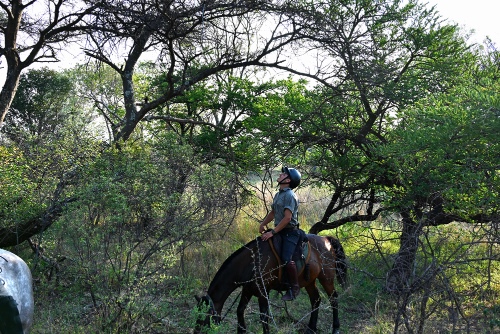
A mentor from the local birding community, Christiaan Viljoen, introduced him to the idea of guiding. As soon as Mark finished matric, he completed his qualification through the Field Guides Association of South Africa and stepped straight into guiding.
“I was blessed to know what I wanted to do and to get into it as soon as I could.”
A different kind of safari
Brandwacht sits just outside Mossel Bay in the Garden Route, within sight of the ocean and framed by mountains layered with history. This is not Big Five country in the traditional Kruger sense. And that, for Mark, is part of the appeal.
During the busy season, from October through March, his days start early. “Wake up at 4:30. Morning safari. Back around nine. Then, afternoon drives or horse safaris.” The reserve spans roughly 900 hectares of fynbos and acacia thicket habitat, with sweeping views of the Outeniqua Mountains and the sea beyond.
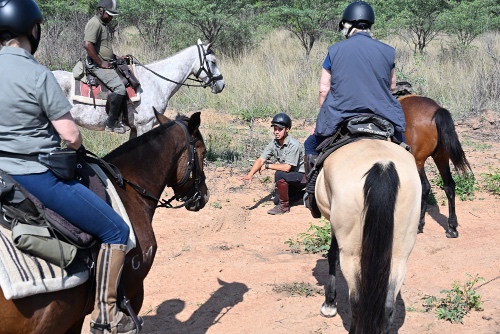
“We don’t host all the Big Five,” he explains. “So we have the opportunity to slow down. Look at the Erica, the Protea. Look at tracks. Talk about the symbiotic relationships. We might not see an aardwolf or a caracal during the day, but here’s the footprint of one of the most elusive animals in South Africa.”
Mark informs us that from certain vantage points on the reserve, you can look out over the ocean and say, “You see that bay? That’s where Bartolomeu Dias landed in 1488. It’s the first place Europeans touched Southern Africa.” The area is layered with Khoisan, Xhosa, and Zulu history, as well as centuries of recorded exploration.
But this is not just about the past. Brandwacht is actively rewilding. The team works to restore species historically recorded in the area, including giraffe and hippo. They partner with the nearby village to grow indigenous trees, then buy them back and replant them on the reserve.
“We encourage guests to get involved. Buy a tree. Come back over the years and see how it’s grown. It’s conservation, but it’s also connection.”
For Mark, guiding is about creating that connection. “People only protect something if they love it. And they only love it if they have a tangible experience.”
From bushveld to barefoot bushwacking
Mark’s connection to local craft runs deep, and that includes what he wears on his feet.
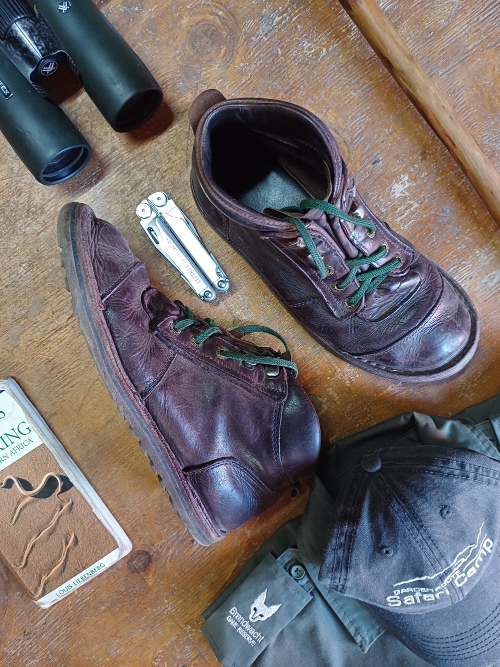
When he first started guiding, his parents gifted him a sturdy pair of boots before he left home. Later, like many in the Garden Route, he wore vellies. “But in the winter rain, they get really wet and don’t last very long.”
As his Instagram presence grew under the name Barefoot Bushwhacking, he came across Jim Green’s Barefoot Ranger. The name felt like a perfect fit. He reached out, introduced himself, and asked if they would consider sponsoring a pair.
“They blessed me with a pair,” he says. “And I’m still wearing that same pair since 2024.”
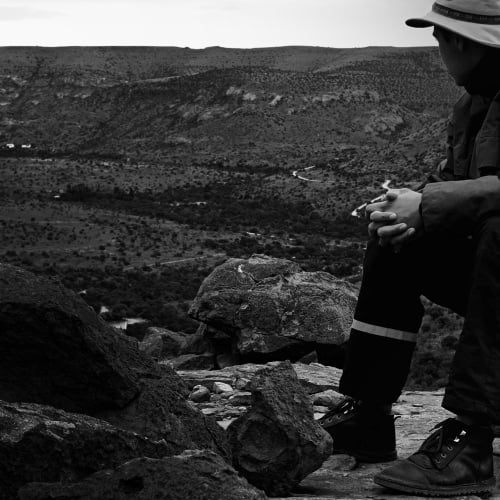
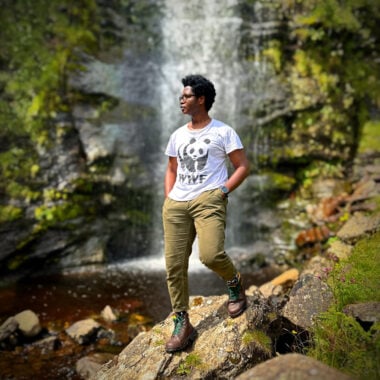
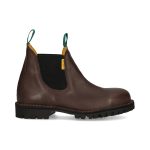
Today, he rotates between the Barefoot Ranger, Barefoot Trooper, and Razorback. “They’re rugged but appropriate for a field guide. Tough. They don’t break like average vellies do. I just polish them every few days, and they’re in surprisingly good shape for shoes that are two and a half years old.”
He laughs. “I’m quite happy and content with these. I don’t need anything else.”
Loving the small things
If there’s a thread running through Mark’s story, it’s attention to detail.
“I believe it’s the small details that together make up the big ecosystem,” he says. Growing up exploring fynbos instead of famous reserves taught him that wonder does not only live in lions and elephants. It lives in lichens on rocks. In bird calls at dawn. In footprints pressed into damp soil.
It’s the same philosophy he hopes to carry into future video work on his YouTube channel. He dreams of building a platform that blends human stories and wild places in a relatable way, inspiring people across generations. “You can’t just say, ‘This is the biggest land mammal and list facts. You have to make people feel something.”